
Bowling Green Construction – Our Unique Drainage System
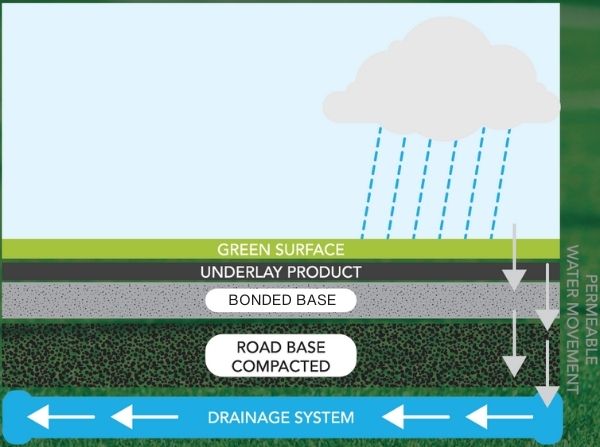
Our unique bowling green drainage system is a polymer stabilised base offering the stability of concrete with the benefit of drawing water down through the permeable surface into the drainage system below.
We specialise in highly reactive H type soils – renowned for heave (ground movement) due to overwatering.
Our polymer stabilising base system and Greengauge woven carpet removes the main cause of ground heave by eliminating the need to water the bowling surface and offers a solid, permeable base keeping water away from the volatile soils below.
As we work very closely with our customers throughout the construction of their synthetic surface you will know what is happening at each step of the process.
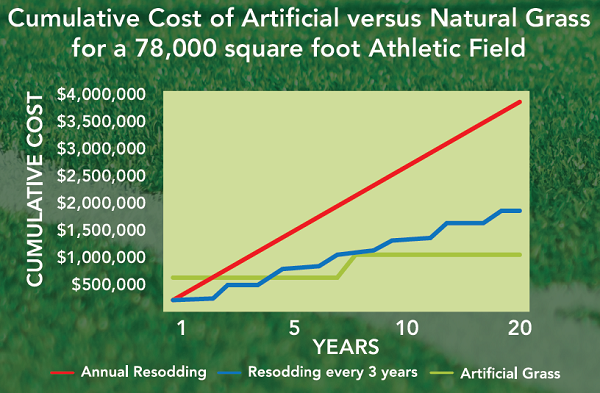
When it comes to maintaining athletic fields, decision-makers often weigh the pros and cons of natural grass versus artificial turf. One of the most significant factors influencing that decision is cost. A recent cost analysis of a 78,000 square foot athletic field sheds light on how expenses add up over time, depending on the type of surface used.
Cumulative Cost Breakdown Over 20 Years. The chart compares three scenarios:
1. Natural Grass – Annual Resodding (red line):
This option has the steepest cost increase over time. Beginning just under $500,000 in year one, the cost rises sharply year after year. By year 20, total expenses exceed $3.5 million. The consistent and high maintenance needs of natural grass, frequent mowing, fertilizing, irrigation, and yearly resodding—make it the most expensive option in the long term.
2. Natural Grass – Resodding Every Three Years (blue line):
This approach reduces the frequency of resodding, resulting in a more moderate cost increase. While still more expensive than artificial grass, it maintains a slower growth rate in expenses. After 20 years, the cumulative cost lands just above $2 million, significantly lower than annual resodding, but still substantially more than artificial turf.
3. Artificial Grass (green line):
With a higher initial investment, artificial grass starts closer to the $1 million mark in the first year. However, its cumulative cost remains nearly flat over two decades, topping out around $1.25 million. Without the ongoing maintenance and resodding requirements of natural grass, artificial turf proves to be the most cost-effective option over time.
Contact us today and see how we can help.
Frequently Asked Questions
Why is drainage so important in a bowling green?
Proper drainage is essential to ensure a consistent playing surface and prevent water from sitting within the base. Good drainage also helps protect the structural integrity of the green, reducing long-term maintenance issues and improving overall playability.
How does the Bioscapes bowling green drainage system work?
Bioscapes uses a polymer-stabilised, permeable base system combined with advanced sub-surface drainage. This allows water to move through the synthetic surface and into the drainage layer below, preventing moisture build-up and reducing soil movement beneath the green.
What makes Bioscapes drainage different from traditional systems?
Unlike traditional systems that rely heavily on watering and natural soil absorption, Bioscapes’ system is designed to eliminate excess moisture issues by directing water away from reactive soils. This helps prevent ground movement and improves long-term surface stability.
Can the drainage system handle heavy rainfall?
Yes. The system is engineered to manage high volumes of water efficiently, allowing rainfall to pass through the synthetic surface and be dispersed through the sub-base drainage layers, keeping the green playable more quickly after wet weather.
Does the drainage system reduce maintenance requirements?
Yes. By controlling water movement and minimising soil instability, the system reduces the need for frequent repairs and surface correction. It also helps maintain a more consistent playing surface with less ongoing maintenance intervention required.
Can the bowling green drainage system be installed in existing greens?
Yes, in many cases the drainage system can be retrofitted into existing bowling greens, depending on the current base conditions and site requirements. A site assessment is typically carried out to determine the most effective drainage solution and whether upgrades or full reconstruction are needed.